3 Simple Strategy Shifts to Unlock Your First $10K Month
TL;DR
We co-hosted a free workshop with Ellen Yin founder and host of Cubicle to CEO® podcast on her Consistent Clients Cashflow (CCC) System: connect, capture, convert.
Connect: stop waiting for your audience to grow, start borrowing other people's audiences, and back it with a client experience worth referring.
Capture: qualify leads earlier with a smarter lead capture form, service-specific workflows, and a gatekept discovery call scheduler.
Convert: make it effortless to say yes, with outcome-focused proposals, one link to sign and pay, and automatic onboarding.
The through line: good systems are a profit tool. Less admin, more time on revenue-generating activities, and a client experience strong enough to fuel referrals.
Missed the workshop? Here's what you need to know
So, you landed a great client and have no idea how you actually did it. Or you're stuck in the feast-and-famine cycle, closing a project one month and wondering where the next one's coming from the next. If any of those feel familiar, you're exactly who Ellen Yin, founder of the Cubicle to CEO®, had in mind when she built her workshop: 10 Simple Strategy Shifts to Unlock Your First $10K Month.
Ellen built Cubicle to CEO® from a single $300 freelance client into a top 10 globally charting entrepreneurship podcast with over a million listens worldwide, interviewing thousands of entrepreneurs along the way. This year, her goal is to help 500 creatives hit their first $10K month, which is exactly what brought her to us for this workshop.
During the workshop, she led us through her Consistent Clients Cashflow (CCC) System, the framework she uses to help business owners build toward their first $10K month without burning out to get there.
She covered a lot of ground with ten simple strategies to get you there. But three shifts kept coming up in the chat, in the reactions, and in our own notes afterward, one from each leg of her framework: connect, capture, and convert. If you couldn't make it live (or you did and want the recap), here's what to take with you.
Connect: stop waiting for your audience to grow, start borrowing someone else's
One of the biggest traps Ellen called out was waiting until your following is "big enough" before you start increasing your visibility and pitching your services. The shift is to stop treating audience growth as a prerequisite and start borrowing other people's audiences instead and adding value through podcast guest spots, collaborations, referral partners, and speaking opportunities.
But borrowed visibility only works if what happens next holds up. Someone refers you or puts you in front of their audience, and then your client experience has to deliver on the promised experience and earn the next referral. That's the part that's easy to overlook: a referral network isn't built by simply asking for referrals. It's built by delivering an experience worth talking about, so people refer you without being asked.
That's exactly what we dug into with Stephanie Cartin of Entreprenista in a recent webinar, Your Network Is Your Net Worth. Watch the replay here for more on building the right relationships to accelerate business growth.
Capture: qualify before you move forward
The capture bucket is where a lot of businesses lose time they don't get back: chasing leads who ghost that were never a fit, fielding discovery calls for projects that don't line up with what you actually offer, and taking on clients who you end up regretting due to misaligned expectations.
Ellen's shift here is to qualify earlier, not harder.
That starts with what your lead capture form actually asks. A good contact form does more than collect contact info, it tells you (and the lead) whether you're the right match before either of you move forward.
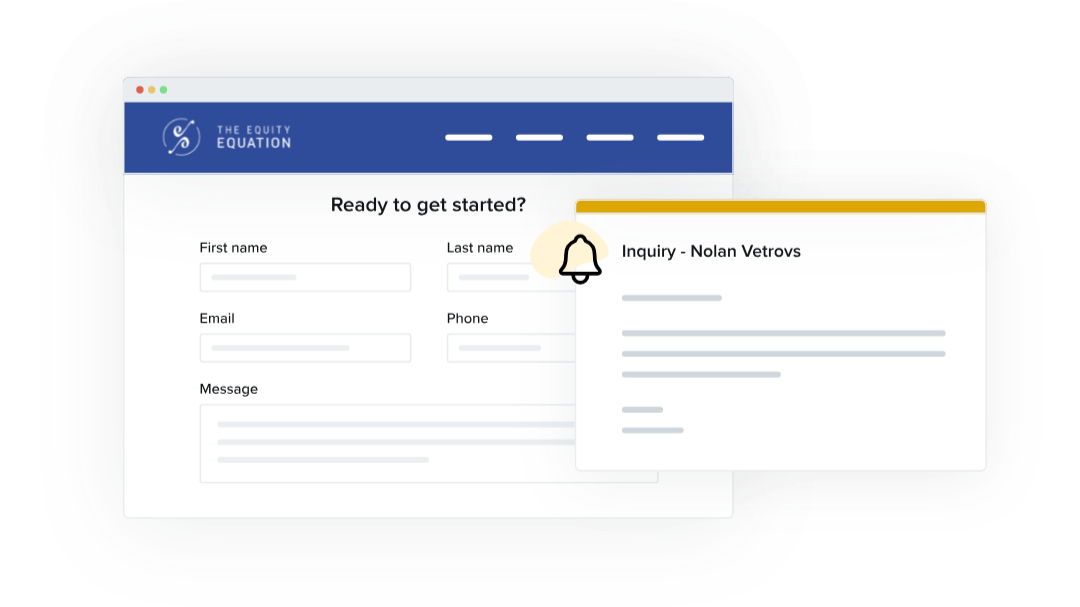
A few things worth including:
What's prompting them to reach out, in their own words (problem, not just a project type)
What a successful outcome would look like if you worked together
What they've already tried that hasn't worked
Budget range, with the lowest option set at your real minimum
Whether they're ready to move now or still browsing
That's the highlight version, read the full breakdown here for the exact questions to ask and why each one matters.
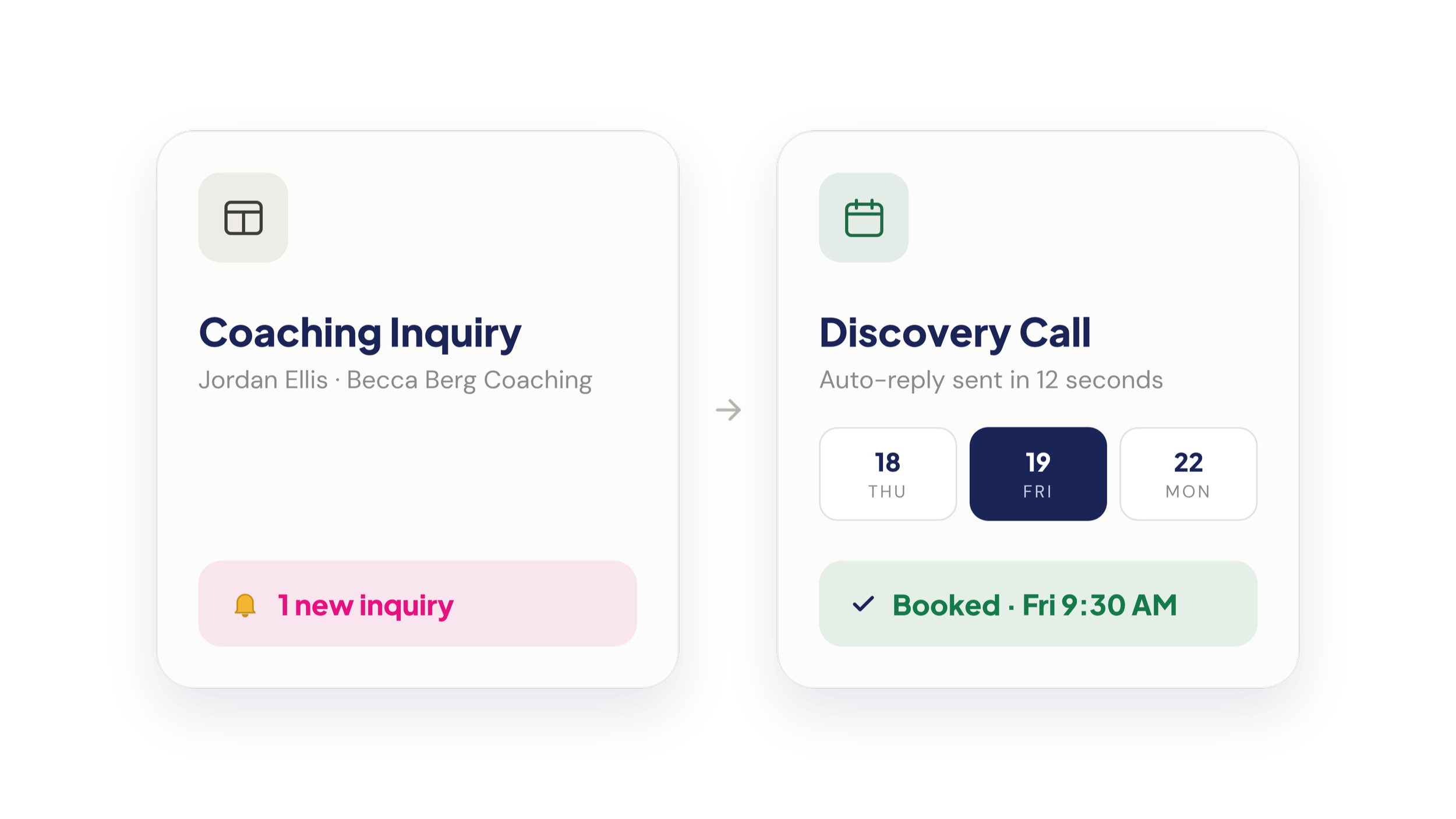
From there, the inquiry workflow should do the nurturing for you. Set up a different automated workflow tied to each service someone selects on your form, so a lead asking about wedding photography doesn't land in the same sequence as a lead asking about a mini session.
And when it's time to actually hop on a call, your scheduler should only be opening up discovery call slots to the leads worth having a conversation with, no email tetris trying to find a time that works for both of you, just a booking link that adds the event to both calendars and sends the reminder emails on its own.
A few principles to start with:
Pre-frame the call in the first 30 seconds, so they know exactly what to expect
Let their inquiry form answers drive your questions instead of starting from scratch
Listen more than you talk, a 90/10 split is the goal
Ask what success looks like to them, specifically, before you pitch anything
We go deeper on this topic here: Powerful Discovery Call Questions That Help You Book More Clients (Without Feeling Salesy).
Convert: make saying yes the easiest part
You’ve worked hard for the lead, so by the time someone's ready to book, the last thing you want is friction that could lead to losing them. Ellen's shift for the convert stage is to make the path from "I'm interested" to "I'm your client" as short and clear as possible. And we couldn’t agree more.
That means a proposal that sells the outcome, not just a list of deliverables, with package tiers and add-ons built in so a client can review and select exactly what to move forward with without needing a separate conversation. It means one link where they can submit the proposal, sign the contract, and pay their invoice deposit in one go, instead of different steps scattered across three different tools and back and forth emails. And it means onboarding can kick off automatically the moment they sign, with welcome emails, intake forms, and next steps already queued up, without you touching a thing. Hallelujah, right?
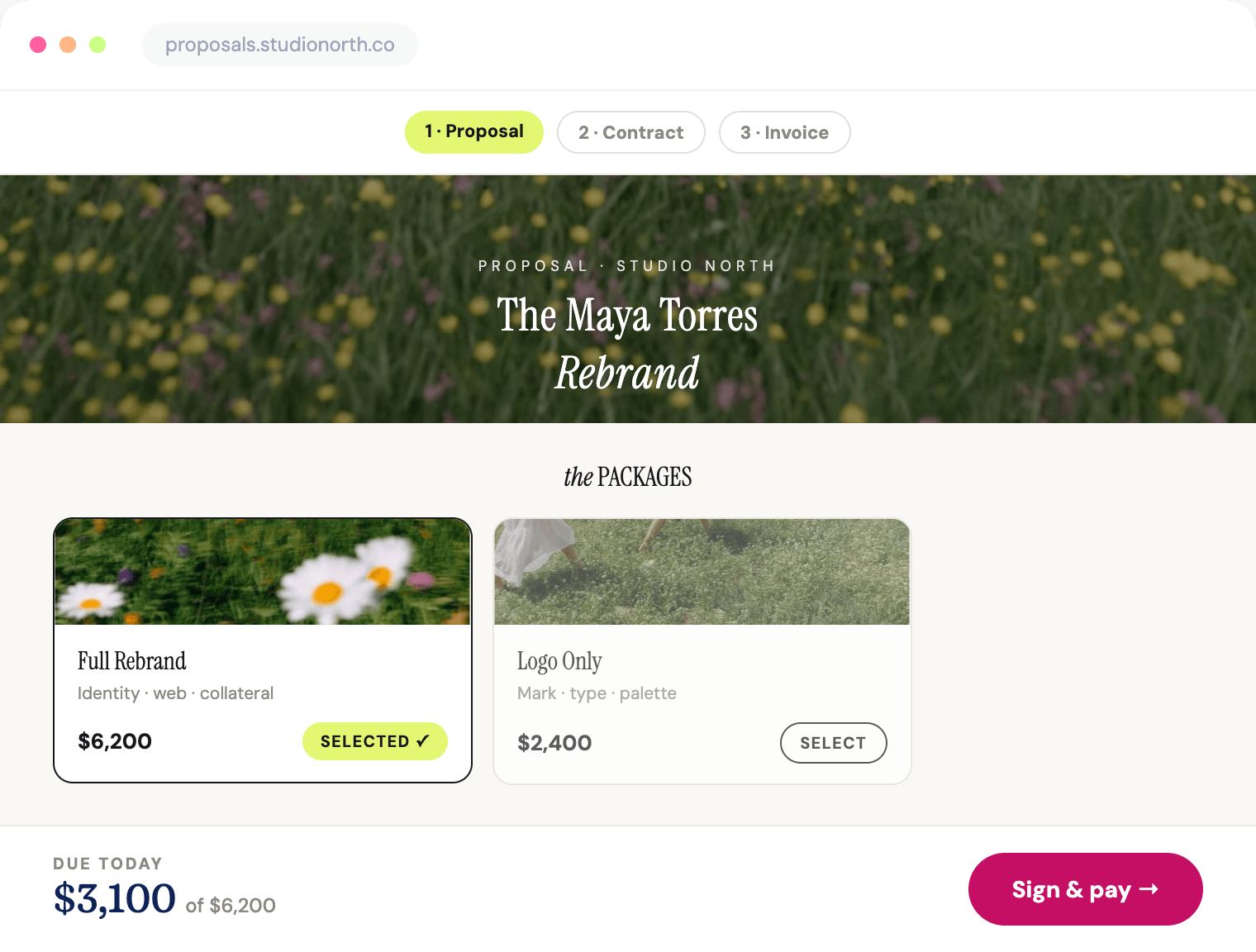
Every one of those handoffs is a place a client can start to wonder if they made the right call. Closing the gaps is what makes the first impression feel as polished as the work you're about to do.
The through line: systems are a necessary profit tool, not just a nice-to-have
Connect, capture, convert - they all point back to the same idea. Every piece of admin you automate is time you get back for the work that actually makes money… the client work, the outreach, the marketing. And every tool you consolidate into one system is a tool you're not paying for separately, which keeps your overhead (and your stress) lower as you scale.
The bonus: a client experience this smooth is the kind people remember and sing your praises about with their network. Which brings you right back to connect, because the referrals that grow your business start with the experience you just gave your last client. That's the flywheel. A good system doesn't just save you time today, it builds the referral network that brings you tomorrow's clients, who become tomorrow's referrals, and so on.
And it’s worth calling out, your version of success doesn't have to look like a $10K month. Maybe it's just taking the afternoon off without asking for permission. Whatever your personal version of success looks like, the shifts above work the same either way.
Frequently asked questions
What is the Consistent Clients Cashflow (CCC) System?
It's Ellen Yin's signature framework for building toward a consistent $10K month in a service-based business. It breaks the client journey into three parts: connect (how you generate traffic and visibility), capture (how you generate and qualify leads), and convert (how you turn qualified leads into paying, signed clients).
How do I get referrals without directly asking clients for them?
Focus on the client experience itself. When onboarding, communication, and delivery feel smooth and professional from start to finish, clients refer you organically because the experience was worth talking about, not because you asked.
What should a lead capture contact form include?
At minimum, enough to tell you whether a lead is a good fit before you get on a call: contact details, the specific problem they're trying to solve, their budget or timeline expectations, and any details tied to the service they're interested in. See our full breakdown for the exact questions to ask.
How can I make client onboarding more automated?
Set up a workflow that triggers the moment a contract is signed and deposit is paid: an automatic welcome email, intake or questionnaire forms, and next-step reminders, so onboarding starts without you manually sending anything.
Why do systems matter for hitting a $10K month?
Because admin work is time you're not spending on revenue-generating activities. Automating the repetitive parts of your client process (lead qualification, contracts, invoicing, onboarding) frees up your time for the work that actually grows your income, while also keeping your client experience consistent enough to drive repeat business and referrals.
Ready to hit your first $10K month?
Start your free 21-day trial, and use code CEO for 30% off your first year.
Start for freeNext steps
Watch the full replay: As a thank-you to our community, we partnered with Ellen to offer the workshop live with a replay free for 72 hours. That window's closed now, but if you want Ellen's complete workshop, including the $10K month money math and her full discovery call framework, you can still grab it through her shop.
Connect with Ellen and Cubicle to CEO:
Start your free 21-day trial of Dubsado, and when you're ready to make it official, use code CEO for 30% off your first year.