How to Build Relationships That Accelerate Business Growth
There's no shortage of ways to market a small business. From content calendars, SEO, speaking, ads. All are useful, but none of them beat a genuine relationship. The businesses that grow fastest usually aren't the ones with the biggest marketing budget, they're the ones with the strongest network of people who refer them, vouch for them, and think of them first. We just hosted a masterclass on exactly this with Stephanie Cartin, co-founder of Entreprenista, and are sharing some of the key takeaways you can implement this week.
So grab your beverage of choice and keep your task list open, you're going to want to act on these tips.
TL;DR: Stephanie and her business partner Courtney have built two seven-figure businesses and pulled in nearly $50 million over the past decade. Her take is that almost none of it happened because of a complicated funnel or more marketing, but because of the relationships they built. Here's how they actually do it (and how you can too).
Missed the full session, or want to watch again? Watch the full replay.
Don't build your network from scratch
Find your way into a network that already exists. Whether that’s a community, a networking group, a membership, virtual or in-person, it doesn't matter which, just get proximity to the people who are already where you're trying to go and who you have something in common with. It's a lot faster and a lot less awkward than cold DMing strangers and hoping for the best.

Think through who could be strategic connections
Stephanie broke down the types of people to strategically seek out, especially if your time is limited and you don’t have time to say yes to every coffee chat invite.
Ideal clients
The obvious one. But don't just think about who's ready to buy today, think about who might be ready in six months to a year. You want to be top of mind for when they are ready.
Take a brand and web designer for example, their ideal client could be the person who just had the idea for their business and hasn't even picked a name yet. Staying visible and connected now means you’re the first name they think of when they're finally ready to invest, whether that's sharing before-and-afters of past brand design projects, posting quick tips on DIY branding when getting started, or engaging with posts from people talking about starting a business.
Referral partners
People who talk to your ideal client before you ever do.
For a brand or web designer, that might be a copywriter, a brand photographer, or a business coach… someone whose clients are about to need exactly what you offer next. They are already in front of your ideal client, and a good relationship there means a warm intro instead of a cold pitch. And as a bonus, referred clients are statistically way more likely to convert.
One that might surprise you, but absolutely do not pass it up: it's smart to build relationships with people who offer exactly what you do. When they're fully booked and have to turn someone away, you want to be the name they think of.
Potential collaborators and partners
People you could build something bigger with, not just refer business back and forth, but actually create something together.
Think a course creator and a designer building a signature offer together, or for example us and Entreprenista creating a co-hosted webinar together. But it doesn't have to be that hands-on, a joint Instagram post, swapping newsletter shoutouts, or co-hosting a workshop counts too. Any time you're putting each other in front of a new audience, that's a partnership.
You don't need to make these connections all at once, but if you've never actually sat down and thought about who belongs in each bucket, that's worth 30 minutes of mapping out who you strategically want to build connections with.
Get visible and show up online like an actual human
Stephanie’s approach isn’t rocket science. Post consistently (her challenge is once a day for 30 days, ambitious, we know… so even 1-2 times a week is better than nothing!), connect with intent, send a quick note to new followers, comment on others posts by adding value or your perspective to conversations, send connection requests with a thoughtful note. It doesn’t have to be complicated or feel icky. Simply showing up as a human can take you so far in this world of AI and mostly online relationships.
Some content ideas to get you started:
Learned lessons
Behind the scenes
Client wins
Industry insights
Make it super simple for people to help you
We often don’t ask for connections because we don’t want to come off as needy or put people on the spot, but the truth is… people are usually so excited to help. They just can't if they have no idea what you actually do or who you're looking to meet. Write your elevator pitch: a clear intro, who you are, what you do, who you serve, and the best kind of introduction for you, and have it ready to go. Pro tip: for when sharing virtually, save it as a keyboard shortcut text replacement so you can easily send it over!
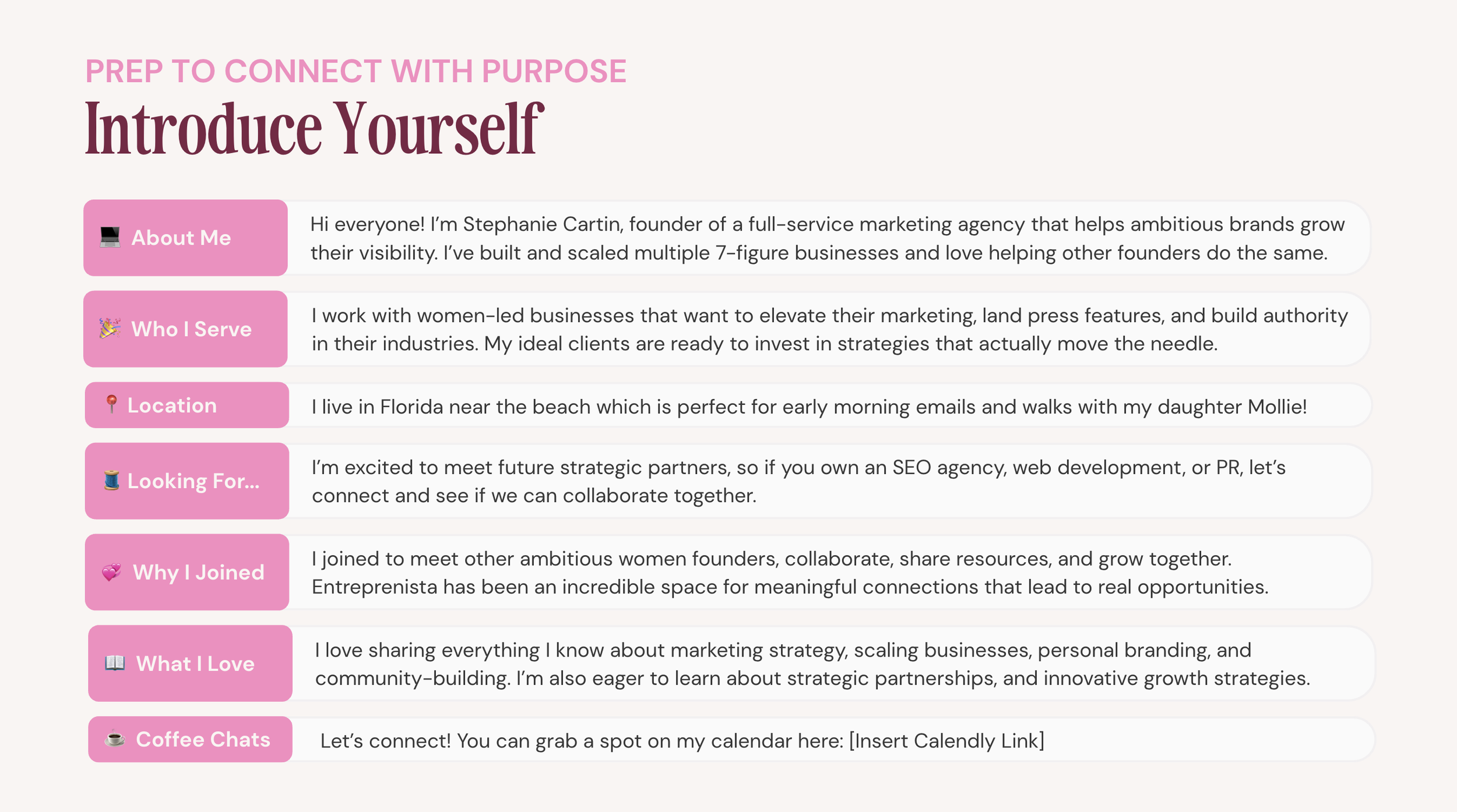
If it's not on your calendar, it's not happening
We've all told ourselves we'll "make time" for networking. And then, well… life happens. Stephanie blocks two to four 30-minute blocks on her calendar each week, solely for coffee chats. And just like any other meeting, she can't just no-show. Do that consistently for a year and that's 100 to 200 new relationships.
Okay, but what happens after someone actually reaches out?
Being sticklers for a good experience, this is the part we can't help but add. You do all this work, you get visible, people start reaching out, and then, now what? Sometimes the "win" of getting more traction can actually secretly stress you out. Because sure, it feels amazing to get all these new connections, but what if the momentum is more than you can handle? If your response is slow, your process feels like a mess behind the scenes, you're playing 12-email tetris just to land on one time that works for a coffee chat, or you never quite follow up, all that effort building relationships doesn't give off the reputation you want to be known for.
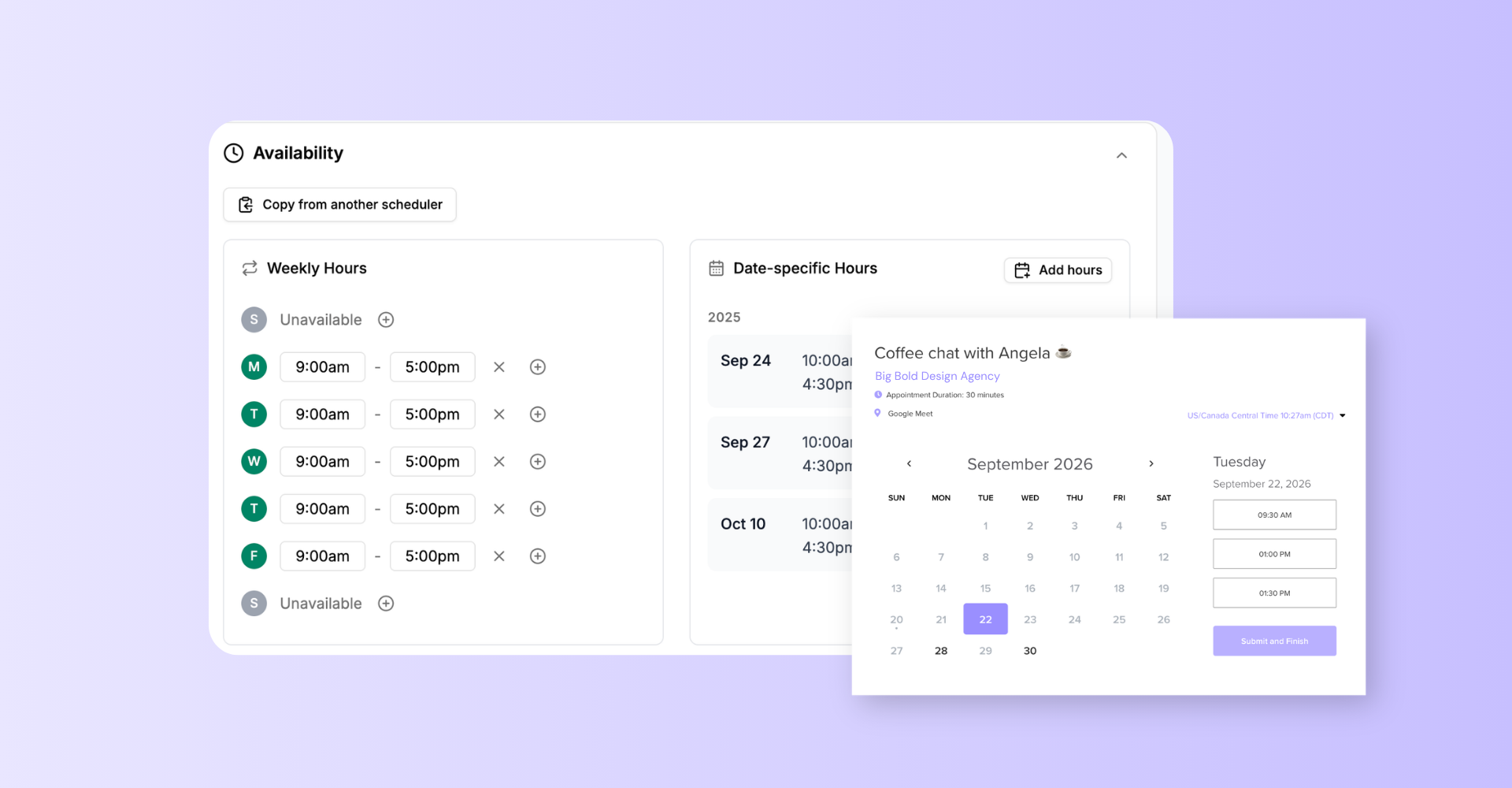
That's the part Dubsado backs you up on. Set up a coffee chat scheduler with your real-time availability, send the link, and they pick whatever time works for them, no back-and-forth, automatic calendar invite and reminder emails included. Tie it to a workflow and it can go even further, for example you could send a coffee gift card automatically before the chat, a check-in a few weeks later to keep the relationship warm, or if that conversation turns into a client, a smooth, automated handoff into booking and onboarding so the relationship you worked so hard to build doesn't lose momentum the second it becomes a paying project. So the relationships you're putting real work into actually turn into paying clients or partners, not just nice conversations that fizzled out.
What to actually say once you're on the call
Blocking the time is the easy part. Knowing what to talk about for 30 minutes with someone you just met is the part that trips people up. Stephanie’s approach: start personal, then let it transition naturally into business.
Before the call, you could even spend a few minutes on their LinkedIn or Instagram. You're not stalking, you're just looking for something real to connect over like a mutual connection, a hobby, solidarity over parenthood chaos. It gives you a genuine way to relate to each other, and it shows you actually care who they are, not just what they can do for you.
A few starters Stephanie recommends:
Where do they live?
What do they love to do outside of work?
Why did they start their business?
What are they excited about right now, personally or professionally?
Once the conversation naturally shifts, share where you are in your business and what you're working toward, then ask the same of them. And before you hang up, don't skip asking if there's a connection they're looking for or simply how you can be most helpful. That question is often what turns a nice conversation into an actual relationship.
Continue to nurture the relationship
One good coffee chat doesn't make you besties. The relationship happens in the follow-up, a quick thank you, actually sending the resource you promised, tagging them in conversations that made you think of them, or making an intro unprompted. Skip this part and you're just someone who talked to them oncce, or, do this part and you're someone that continues to stay top of mind.
Frequently asked questions
How many coffee chats should I actually be doing each week?
Stephanie’s target is two to four, 30 minutes each, blocked on her calendar like a real meeting. Start with one if that feels like a lot, consistency matters more than volume.
What should be in my elevator pitch?
Who you are, what you do, who you serve, and the best kind of introduction for you. Keep it short enough to say out loud without losing your breath, and human enough where it doesn’t feel like you’re reading from a script.
I feel awkward reaching out to people I don't know well. Any advice?
Lead with serving others: genuine curiosity or value instead of a pitch. Ask about them or offer something that would benefit them before you ask them for anything. It sounds obvious, it's also the part most people skip.
How do I keep track of all these new relationships once I have them?
Honestly, you need a system for it, a CRM, a spreadsheet, something. Trying to hold it all in your head is how good connections quietly disappear.
Next steps
There's a lot more in the replay, including live Q&A we didn't cover here. Watch it here.
Special offers
Stay connected