The First 8 Steps to Start Your Freelance Creative Business
Starting a creative service business is an adventure—full of excitement, possibility, and yes, a few (okay, a lot of) moments of overwhelm. It’s completely normal to wonder if you’re focusing on the right things or missing a crucial step.
The good news? You don’t need to have it all figured out right away (in fact, most entrepreneurs report that they wish they would have started sooner without knowing all the answers). By prioritizing a few key areas on day one, you can build a strong foundation that sets you up for growth—and a client experience that’s as polished as your best work.
Here’s a high-level look at the top things to consider and prioritize as you start your creative business. For a more detailed walkthrough, download our free Day 1 Checklist.
What qualifications do you need to start a business?
The best part about starting a creative service business? You don’t need formal qualifications or certifications to get going.
All you need is a skill you’re excited to share—whether it’s design, photography, coaching, administrative support, or another creative service. From there, it’s about delivering great work and refining your process along the way.
If you choose to, you can always invest in certifications, courses, or additional training to grow your skills; but it’s completely optional.
What are the up-front expenses of starting a business?
One of the great things about starting a creative service business is that you don’t need a huge budget to begin.
Most of what you need is likely already at your fingertips:
✅ A computer and reliable internet ($0)
✅ A business email address ($7/month, although, free Gmail account works just fine to start)
✅ Google Drive to keep things organized (included in the $7 workspace cost above)
✅ A way to capture leads and share offers — even without a website. Dubsado’s lead capture forms and public proposals let you showcase your services and sign clients directly, even if you don’t have a website yet. (Free for up to your first 3 clients, upgrade when you’re ready at $20-$40/month)
✅ Invoicing tool like Dubsado
✅ Canva for any design needs (they have a free plan)
✅ A presence on social media (free!)
Over time, you might decide to invest in additional tools or templates to make your process even smoother—but these basics are enough to get going.
1. Choosing your services and how to structure them
One of the most important decisions you’ll make when starting your creative business is deciding what to offer and how to offer it.
If you already have a specialty—like photography, coaching, design, or writing—this might feel obvious. But if you’re still figuring it out, start by thinking about your skills and what lights you up.

Pro tip: Look for that sweet spot between what you’re great at, what people will pay for, and what you genuinely enjoy doing. And here’s the great news: it’s your business, so you can always pivot later if you want. Start small and experiment - you’ll learn what resonates and can evolve as you grow.
2. Be legally legit from the start
When you’re just getting started, it’s easy to focus on the creative side of your business—your services, your branding, your client experience. But one of the best ways to protect your time, talent, and income is to make sure your business is legally set up and covered from the start.
Register your business:
Even as a solo creative, registering your business protects your personal assets and can add a layer of professionalism that reassures clients.
Sole proprietorship: The simplest option—just register your business name if it’s different from your own name. Keep in mind, you’re personally liable for any business debts.
LLC (Limited Liability Company): A popular choice for creative entrepreneurs. It separates your personal assets from your business and can offer more flexibility as you grow.
Other structures: Some businesses choose to incorporate later, but for most creatives starting out, a sole proprietorship or LLC is the way to go.
Not sure which structure is right?
A quick chat with an accountant or small business lawyer can give you the clarity and confidence to move forward.
Make sure to check if your city or state requires a business license or permit, depending on your services.
Create a contract
A clear, professional contract does more than outline what you’ll do—it sets the tone for collaboration and shows your clients you’re serious about delivering a great experience.
Your contract should cover:
Your services and deliverables
Timelines and payment terms
Cancellation or refund policies
Any other expectations to keep your project on track
Need a template to get started with? Head to Contracts Market, The Contract Shop, or The Legal Paige.
Tools like Dubsado make it easy to create reusable contract templates that autofill with client details, saving you time and ensuring every project starts off polished and protected.
3. Define your brand look and feel
Your brand is more than a logo—it’s the first impression you make and the promise you deliver on. Choose your signature colors, fonts, and design elements to reflect who you are and the experience you want clients to have.
Tools like Dubsado make it easy to apply your brand look and feel across every touchpoint like customizable forms and email templates, so you always present a polished, consistent image.
4. Establish your invoicing process
Getting paid on time keeps your business healthy. Set up an invoicing process that’s clear, professional, and easy for your clients.
Using a tool like Dubsado, you can create branded invoice templates, automate reminders for past-due payments, and handle transactions from start to finish in one place.
P.S. Don’t be tempted to give away your time for free. Your expertise is valuable, even if you’re just getting started. If you truly feel like you need a stepping stone to figuring out your pricing, start out with a small discounted rate in return for a testimonial.
5. Document your ideal client journey
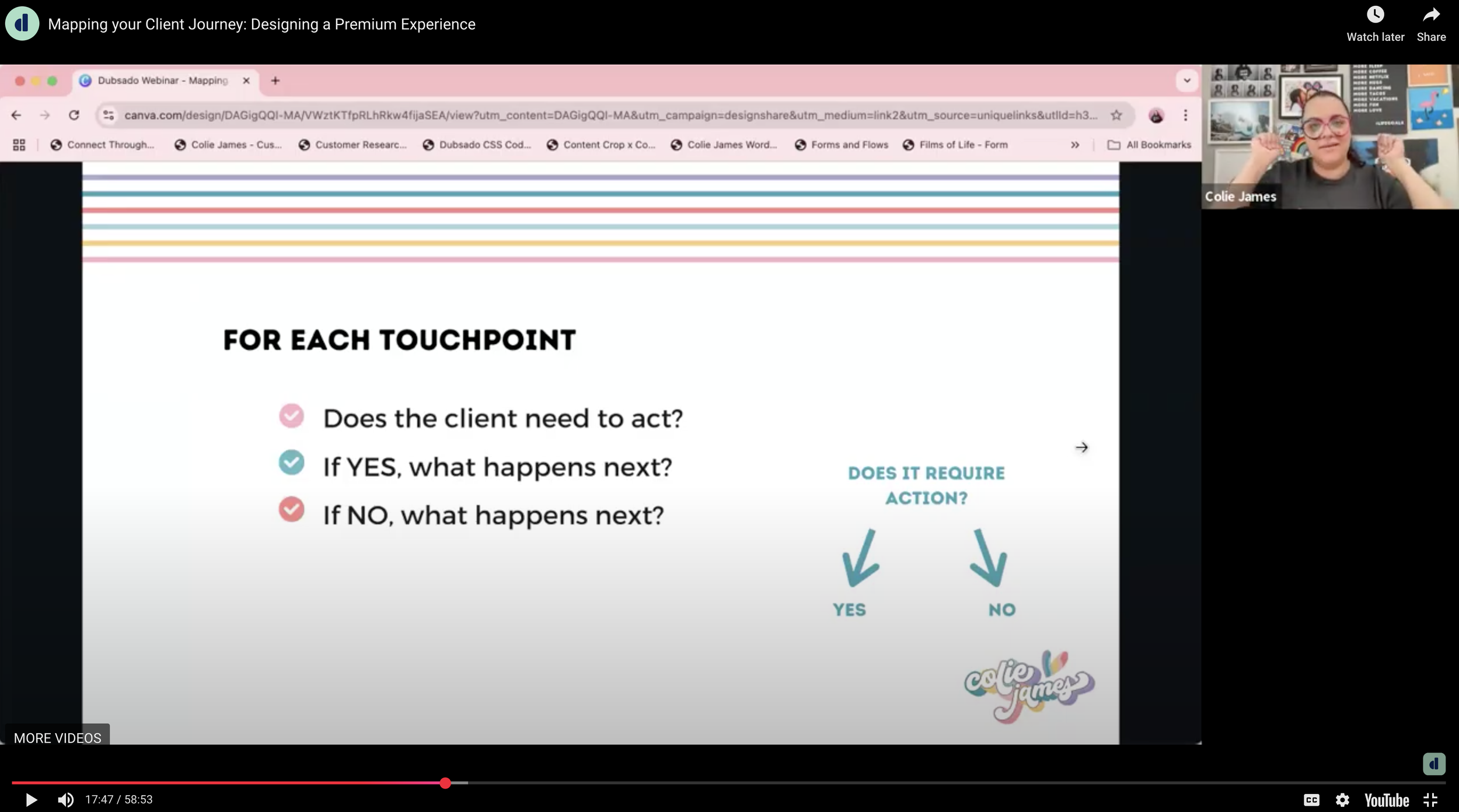
Before you even start working with clients, map out the general experience you’d like to deliver—from the moment a new inquiry lands in your inbox to the final project handoff and feedback collection. Don’t get too hung up on perfecting this, (because spoiler alert: this will change often when you start) but its good to have a rough draft to keep you feeling calm and confident along the journey.
Think about:
How you capture and respond to new inquiries and qualify leads
What materials you’ll share to set expectations (like proposals and contracts)
What tools you need to get paid reliably and schedule meetings
How you’ll onboard clients to ensure they feel confident and supported
The steps in your project delivery process
How you’ll close out projects and collect feedback
Need a little guidance to get started? Checkout this webinar recap of how to map a premium client experience.
6. Streamline what you can
When you’re wearing every hat in your business, streamlining repeatable tasks is key. Think about which steps you can standardize—like sending canned email templates for your new inquiries or sending proposals, or automating reminders for meetings and upcoming invoices.
Dubsado’s automation features help you stay organized and deliver a consistent experience, even as you grow. But you do not need to automate right away. In fact, we recommend you serve at least 10 clients to really nail down your client experience before you dive into any advanced automations.
7. Stay ready to grow
The early days of business are about laying a solid foundation. But even in those first few months, it’s smart to think about how your processes can scale.
By using tools and templates that grow with you, you’ll avoid feeling overwhelmed down the road—and have more energy for the work you love most.
8. Deliver a great client experience
Your clients aren’t just buying your service—they’re investing in the experience of working with you. Clear communication, proactive updates, and thoughtful touches make them feel cared for and excited to come back for more (and refer all their friends!).
That’s where Dubsado helps you shine: it helps you communicate well, stay aligned on expectations, and deliver a polished experience every time.
Ready to build your dream business?
No one starts with all the answers. But when you prioritize these essential steps, you’re not just checking boxes—you’re building a business that’s set up to thrive.
👉 Download our free Day 1 Checklist for the first processes you need to make sure you’re putting your best foot forward from day one.
👉 Or if you’re ready to take the leap, start your free Dubsado trial today and see how these tools can bring your vision to life.